If you have spent any time in a professional racing paddock, you have likely heard a team principal claim their late-race strategy shift was driven by “gut feeling” or “racer’s instinct.” I am here to tell you that is nonsense. In the high-stakes environment of endurance racing, nobody is betting a $50 million program on a feeling. We are betting it on probability distributions, high-frequency data streams, and the cold, hard reality of sensor drift.
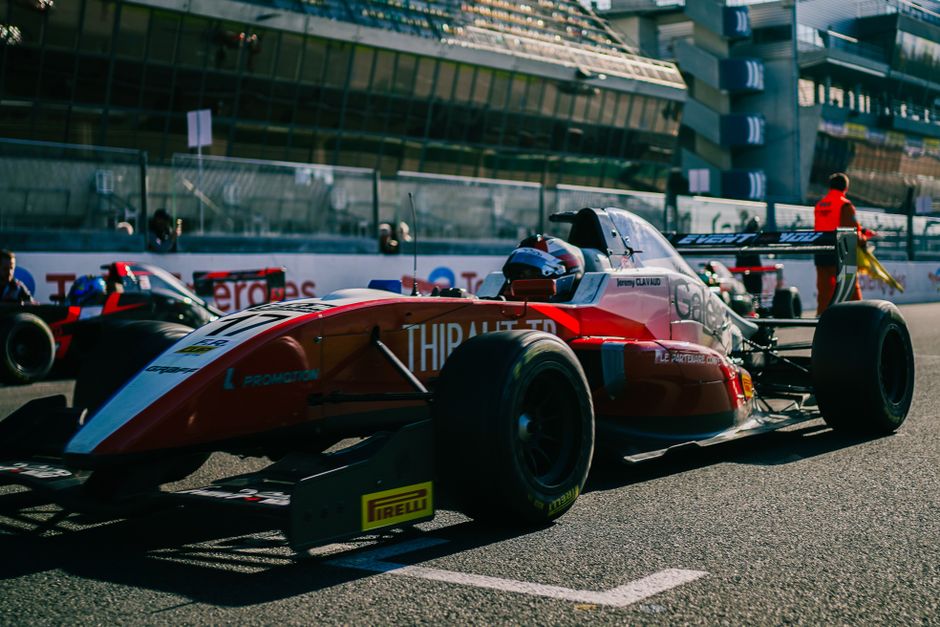
When we talk about race telemetry, we aren’t talking about a magical dashboard that tells us exactly when a tyre will fail. We are talking about thousands of data points per second—a chaotic, noisy, and incomplete picture that we must organize into a coherent strategy before the next corner.
The Anatomy of the Data Stream
Telemetry isn't just one feed. It is an amalgam of disparate systems—chassis sensors, powertrain diagnostics, and environmental variables—all fighting for bandwidth on a radio frequency that is often saturated with pit-to-car chatter and other teams' interference. The MIT Technology Review has covered the shift toward data-heavy racing extensively, noting that the bottleneck is no longer how much data we can collect, but how much we can process in real-time.
Let’s look at the primary inputs that dominate our screens during a standard stint:
- Tyre Temperatures: We aren’t just looking at a single number. We are looking at carcass temperature, surface temperature, and pressure delta. These metrics fluctuate based on load, track evolution, and the driver’s specific line through a turn. Brake Wear: This is a critical safety and performance metric. We track brake pad thickness (via sensor displacement) and rotor temperature to ensure we don’t have a catastrophic failure in the final hour. Engine/E-Motor Diagnostics: Oil pressure, coolant temperatures, and battery state-of-charge (SoC).
To put this in perspective: if we have 500 sensors logging at 100Hz, we are dealing with 50,000 data points per second per car. A quick back-of-the-envelope calculation: that is 3 million data points per minute. If you try to look at all of that, you see nothing. We don't watch the data; we watch the *anomalies* in the data.
The Probability Trap: Monte Carlo Simulations
This is where the amateur strategist fails. They see a tyre temperature climb and assume, with 100% certainty, that the tyre is "cooked." Reality is probabilistic. We use the Monte Carlo principle to run thousands of simulations during the race to determine the likelihood of a successful stint extension.
A Monte Carlo simulation allows us to account for variables we cannot control—traffic, yellow flags, or a sudden change in track temperature. We feed the model our current tyre temperatures and historical degradation curves. The result isn't a "go" or "no-go" command; it’s a distribution of outcomes.
For example, if the model suggests a 70% probability of finishing the stint on the current compound, we have to weigh that against the 30% chance of a puncture or a drop-off in lap time that loses us track position. Researchers in Applied Sciences (MDPI) have published excellent papers on how these stochastic models reduce the variance in predictive maintenance—essentially, we are trying to shrink the "uncertainty window" of our strategy.
Comparing Predictive Tools
Tool Type Primary Input Use Case Confidence Level Deterministic Logic Sensor Thresholds Critical Alerts (e.g., Low Oil Pressure) High (Absolute) Monte Carlo Simulation Stochastic Distributions Pit Window Selection Moderate (Probabilistic) Heuristic Analysis Driver Feedback/Past Races Track Conditions Low (Qualitative)Note that this comparison is only partial; it doesn't account for the human factor—the driver’s ability to "manage" the car to match our model. You cannot simulate a driver’s fatigue or their confidence in a damp track.
Real-Time Decision Making: The Pit Wall Environment
When I was working in the endurance circuit, the pit wall wasn't a place for shouting—it was a place for silence and rapid verification. If our models indicated that brake wear was accelerating faster than our simulation predicted, we didn't just guess that the brake cooling duct was blocked. We checked the telemetry logs for corresponding aero load changes or ride height variances.
Some people—perhaps influenced by the rise of data-driven betting platforms like MrQ—assume that because we have so much data, we should be able to predict the exact lap a car will fail. That is a dangerous mindset. Predicting failure in a complex system like a GT3 race car is essentially chasing ghosts. You are dealing with non-linear degradation and sensor noise.
When you hear a commentator use a phrase like "game-changing technology," tune it out. Strategy is not a revolution; it is an incremental refinement of risk management. We are not looking for a "win-all" strategy; we are looking to avoid the catastrophic errors that take us out of the game entirely.
Data Density and Sensor Drift
One challenge that is rarely discussed in the fan-facing media is the "drift" of sensors. Over an eight-hour race, tyre temperatures sensors can drift due to heat soak or debris accumulation. If your model assumes the sensor is 100% accurate at hour seven, your simulation will produce garbage results.
We perform constant sanity checks. If the tyre pressure sensor suddenly spikes while the car is in a straight line, we assume a sensor fault until verified by the Get more info driver or pit-lane camera. Overstating the certainty of these systems is the fastest way to lose a race. You must treat your telemetry as an opinion, not a law of physics.
The Reality of "Real-Time"
We often use the term "real-time," but it is a misnomer. By the time the signal travels from the car to the pit box, and by the endurance racing strategy time our software processes that packet, we are looking at data that is at least a few seconds old. In a world where a car covers 50 meters per second, those seconds matter.
The "art" of pit-wall strategy isn't intuition. It is the ability to interpret delayed, noisy, and imperfect data while keeping a cool head under the pressure of a 200-mile-per-hour reality. We aren't guessing. We are calculating the odds, hedging our bets, and praying the sensor doesn't fail right when the rubber does.
Final Thoughts
The next time you see a team opt to stay out on old tyres instead of pitting, don’t assume it was a "hunch." It was likely a Monte Carlo simulation suggesting that the probability of success outweighed the variance of a potential tyre blowout. It’s nerdy, it’s frustrating, and it is entirely based on the raw, ugly, and beautiful flow of telemetry data.

Racing is rarely about who is the fastest. It is about who can best handle the probability of their own failure. And that, ultimately, is what we are paid to calculate.